Shoppers visiting online retailers’ sites from artificial intelligence referrals are both converting at a higher rate and spending more money than their counterparts not using AI, according to data from Adobe Analytics.
Adobe found that shoppers using AI referrals generate 53% more revenue per visit than other shoppers. Additionally, AI-based retail site visits convert at a rate 60% higher than non-AI traffic. That’s the 11th straight month that AI traffic outperformed non-AI traffic in conversion, based on the software company’s data. Both points reflect shifts from a year ago.
In July 2026, AI-referral traffic to U.S. retail sites increased 62% year over year, according to Adobe. And compared to October 2024, when generative AI platforms such as OpenAI’s ChatGPT became more widespread, AI-referral traffic has increased 1,219%.
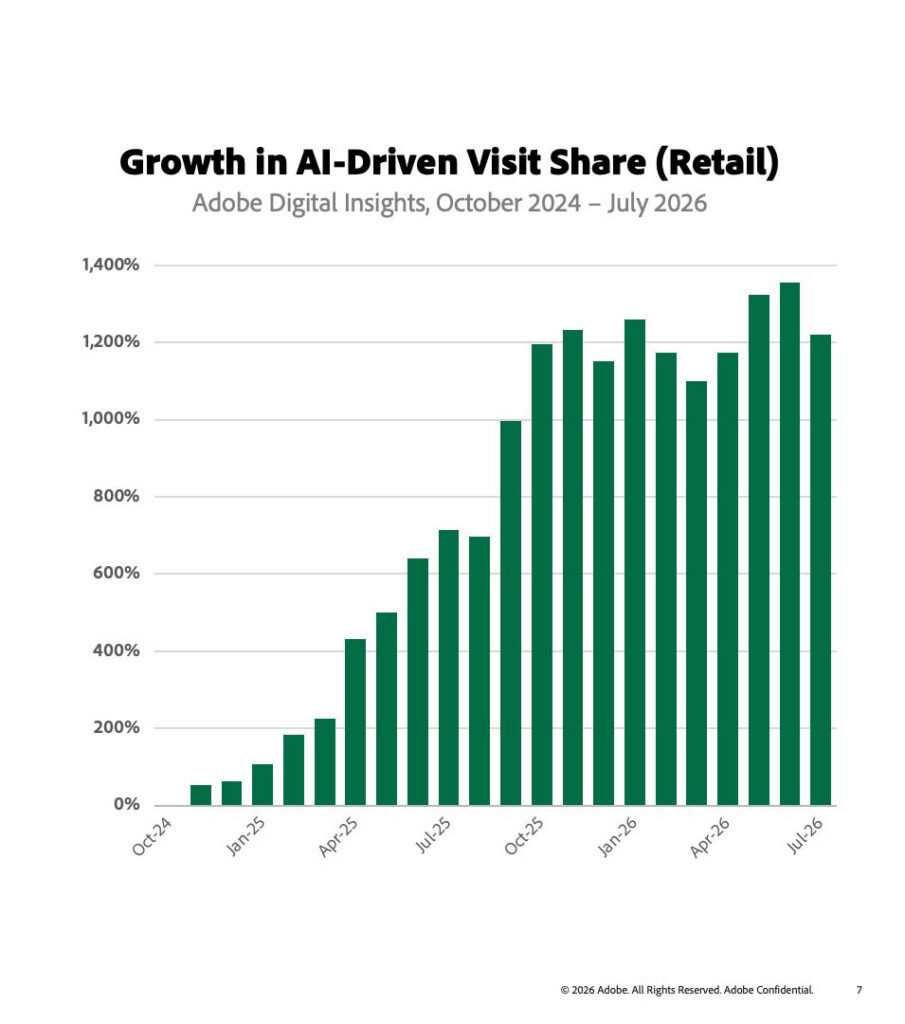
Adobe Analytics data indicates AI-referral traffic to U.S. retail sites increased 62% year over year in July 2026. | Image credit: Adobe Analytics
Assessing AI readiness among online retailers
Adobe said it has developed an “AI Content Visibility Checker.” It described the checker as a diagnostic tool that analyzes web pages. The tool then identifies what large language models (LLMs) can and cannot read.
“When an LLM cannot easily read brand content (such as amenities, pricing or availability), potential revenue is being left on the table,” according to Adobe.
Adobe said it based its insights on direct online transactions from more than 1 trillion visits to U.S. retail sites. More than 200 of the Top 2000 largest online retailers used Adobe for web analytics in 2025. They combined for more than $836 billion in ecommerce sales that year.
Digital Commerce 360 has also released all-new AI Rankings tied to its Top 1000 Database. The AI Rankings measure how prepared Top 1000 retailers are for the rise of AI-driven shopping and agentic product discovery.

How AI-referral traffic has affected conversion so far in 2026
Adobe also indicated that consumers arriving at U.S. retail sites from AI platforms engage 14% more than their counterparts. They spend 59% more time on site and bounce 33% less.
In addition, consumers arriving from AI referrals add items to their cart 28% more than other shoppers.
“These figures demonstrate the ongoing value AI provides in the e-commerce sector, reducing time required for shoppers to locate desired products or find relevant deals,” according to Adobe. “Many U.S. retailers, however, continue to have AI visibility gaps.”
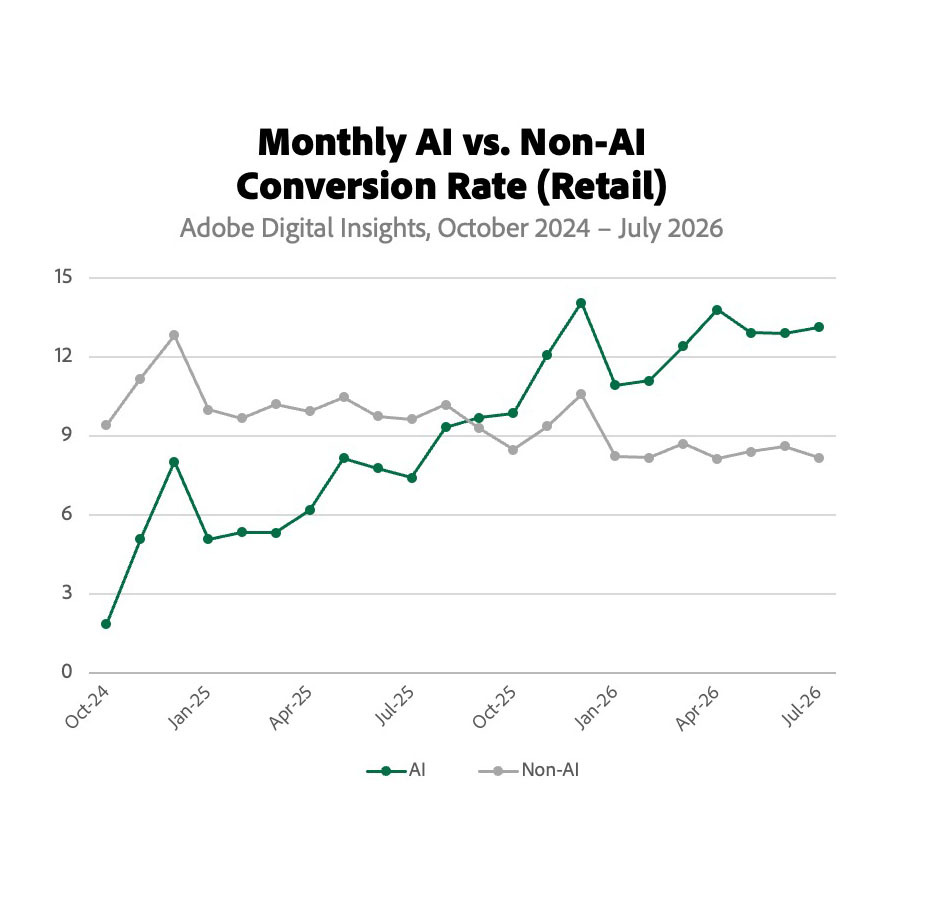
AI-based retail site visits convert at a rate 60% higher than non-AI traffic. | Image credit: Adobe Analytics
Adobe said that in April, retailers had not optimized about 25% of content on their homepages for LLMs. It said that by July, it had expanded its analysis to a “broader set” of U.S. retail sites, not specifying the increase. However, Adobe’s expanded cohort’s LLM visibility reduced to 61%. That means that 39% of those retailers’ homepages are not machine-readable.
Based on Adobe’s categories, retailers scored:
- Apparel: 76% (meaning 24% was not machine-readable)
- Electronics: 70%
- Cosmetics: 68%
- Sporting Goods: 67%
- Furniture & Home: 64%
- General Merchandise: 63%
- Grocery: 59%
For apparel, electronics and cosmetics retailers, Adobe said, “consistent and structured product content is helping drive AI visibility.” It credited part of that to news stories and corporate blog posts.
“For the remaining categories, the data highlights a need for teams to update their digital properties and ensure content can be easily parsed by machines,” Adobe said. “Overall, Adobe’s data highlights that while U.S. travel and retail brands have established a baseline for AI visibility, critical adjustments are still needed. As consumer adoption of AI tools continues to accelerate, these brands must ensure their full ecosystem of digital content is fully optimized for LLMs, to maintain visibility and relevance in today’s market.”
Do you rank in our databases?
Submit your data and we’ll see where you fit in our next ranking update.
Sign up
Stay on top of the latest developments in the online retail industry. Sign up for a complimentary subscription to Digital Commerce 360 Retail News. Follow us on LinkedIn, X (formerly Twitter), Facebook and YouTube. Be the first to know when Digital Commerce 360 publishes news content.