Sponsor content is created on behalf of and in collaboration with PRNEWS.IO by DigitalCommerce360. Our editorial staff is not involved in the creation of the sponsored content.
The Anaheim firm spent years fighting counterfeits of its signature Jack Rack key holders across marketplaces. On Temu, it found IP protection at several stages. The firm now spends less time policing knockoffs and more time building the business.
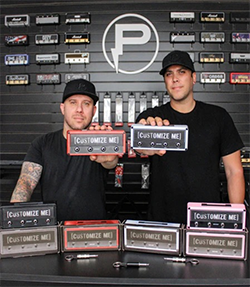
Mike Stricklin and Dan Jacobs
The Jack Rack, a key holder shaped like a guitar amp, is Pluginz’s flagship product. You hang your keys off it on plugs, the way you’d run a cable into a real amplifier. The front panel can be customized to carry licensed art from bands and gear brands, from Slayer to Marshall, and the same official licensing runs through the rest of the catalog, including guitar-pick-shaped clocks and desk organizers built like miniature amps.
For a business built on official licenses, every counterfeit is a threat. Founders Dan Jacobs and Mike Stricklin spent years policing knockoffs across every marketplace they sold on. When they listed on Temu in 2025, the intellectual property (IP) checks struck them as particularly rigorous. Before they could list a single product, every license, partnership and design had to be verified against the rights behind it.
“It means Temu takes their intellectual property protection seriously,” said Jacobs.
Pluginz joined Temu’s Local Seller Program, which lets domestic businesses sell and fulfill orders locally, in November 2025. Within six months the Anaheim-based business sold more than 10,000 items, and Temu became its fastest-growing sales channel.
Built on licenses from Marshall to Ozzy Osbourne
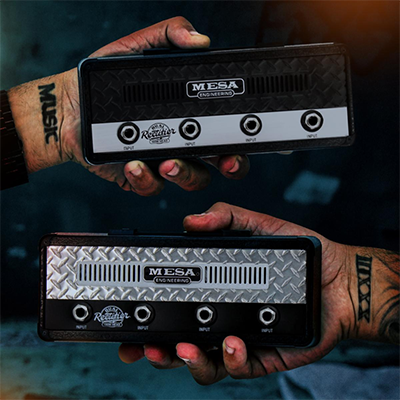
The Jack Rack key holder is Pluginz’s flagship product.
Stricklin built the first Jack Rack in 2015 from guitar amp parts, mounted it on his garage wall and posted a photo to Reddit. It went viral and a crowdfunding campaign funded his first production run. Within months he says he was averaging $10,000 a day in sales and hand-assembling units with friends.
Stricklin teamed up with Jacobs, a guitarist for Southern California metalcore band Atreyu with contacts across the industry, and the two chased official licenses. Jacobs pitched Marshall and landed the first deal. Fender, Gibson and Mesa Boogie followed, along with acts including Ozzy Osbourne and Oasis.
The bigger the brands, the bigger the counterfeiting problem. Every new license became a new target. Counterfeits of the licensed Jack Racks spread across the marketplaces where Pluginz already sold, and it spent years and legal resources chasing them down. The company holds patents and trademarks on its designs, and licensing agreements with each brand it works with, giving it legal tools to pursue infringers.
“We’re not a big company. We just made something people wanted, and kept going,” said Stricklin. “The hard part has been protecting what we built.”
IP protection at every stage
Temu runs its IP screening at several stages, from before a product goes live to well after. The platform verifies a seller’s licenses and rights at onboarding, checks listings against its brand-and-image database, and keeps monitoring for infringement after.
In its 2026 IP Protection Report, Temu said that proactive removals of infringing listings outnumbered reactive takedowns by a ratio of 331 to 1, up from approximately 200 to 1 the previous year. The e-commerce platform has tripled its IP protection coverage to 15,000 brands, according to the report.
The monitoring continues after the store opens. Temu acts quickly on suspected counterfeits, whether it catches them itself or a report flags them. The company says it takes less than 24 hours on average to resolve IP complaints.
Stricklin saw that response work firsthand. Shortly after joining, he flagged a suspected counterfeit of one of Pluginz’s licensed products. Temu reviewed it and began enforcement within hours. Stricklin knew the grind of pursuing knockoffs alone. What struck him on Temu was a multi-layered system doing the catching.
New genres, new markets
Once Pluginz opened its Temu storefront, it reached buyers it hadn’t before, many finding the brand for the first time and coming back to buy again. Temu orders now run into the hundreds a day, picked, packed and shipped from Pluginz’s own fulfillment center in Anaheim. Stricklin said the store was outselling his established channels within days, before the full catalog was even synced.
For Pluginz, Temu’s screening means less time policing knockoffs and more time building the business.
It is now widening its lineup to keep up with demand and plans to expand into European markets through Temu. The company is also pushing past hard rock and metal into new genres, like country and rock and roll, aiming to launch a new band license roughly every two weeks. “We’re just getting started,” Stricklin said.
Favorite